by Zoe Wennerholm
At 10:30am on a cold, bright February morning, the education center at the USS
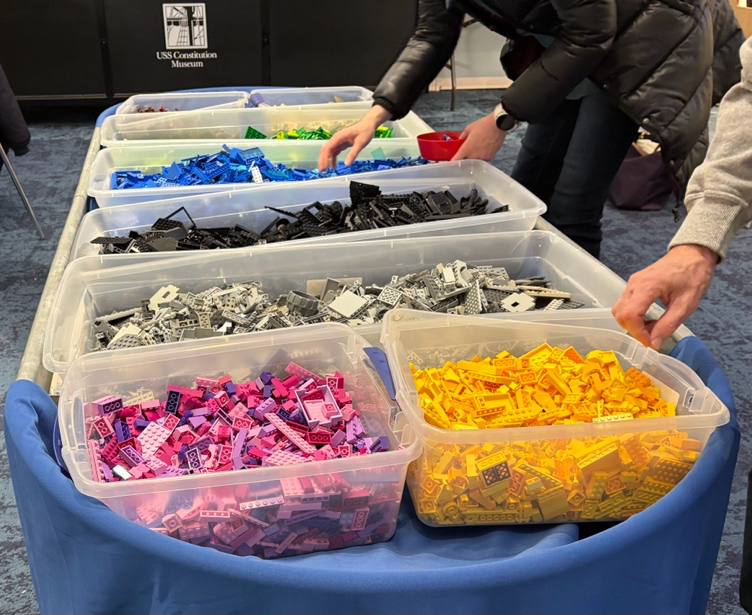
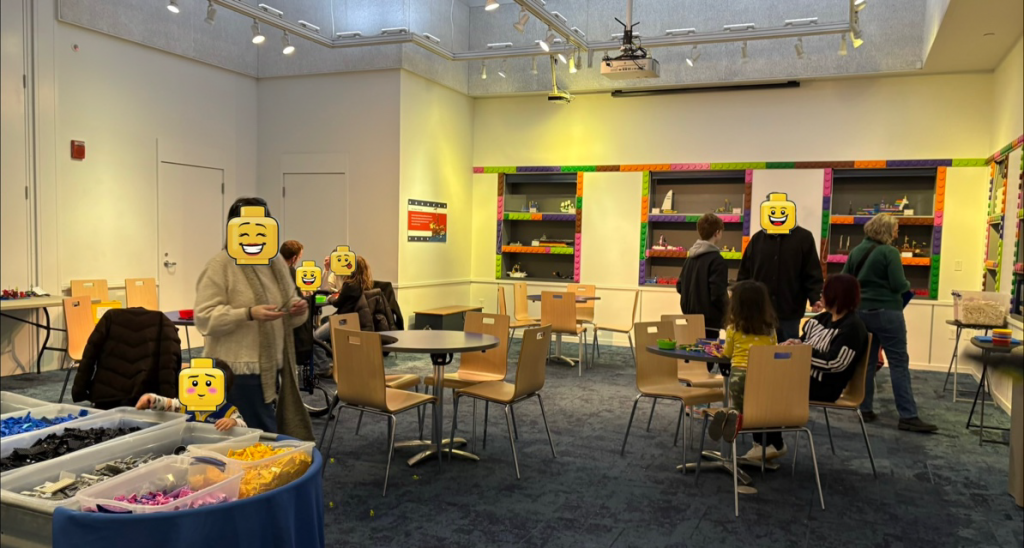
Constitution Museum was buzzing with quiet, determined concentration. Groups of children, parents, and grandparents sat at circular tables scattered around the room, unleashing their creativity through what is arguably the world’s favorite construction toy: Legos. Pop hits drifted from a speaker as visitors sifted through bins of plastic blocks, selecting the perfect pieces to complete colorful model ships of all shapes and sizes. At the USS Constitution Museum’s annual Lego Maritime Festival, intergenerational
education and play was as vibrant as ever.
The Lego Maritime Festival has become a beloved tradition at the Museum. While the museum hosts Lego building events throughout the year, the festival is always timed to align with school vacation week for Boston’s public schools, giving families an ideal destination to play and learn during a particularly snowy and gloomy month. This year, the
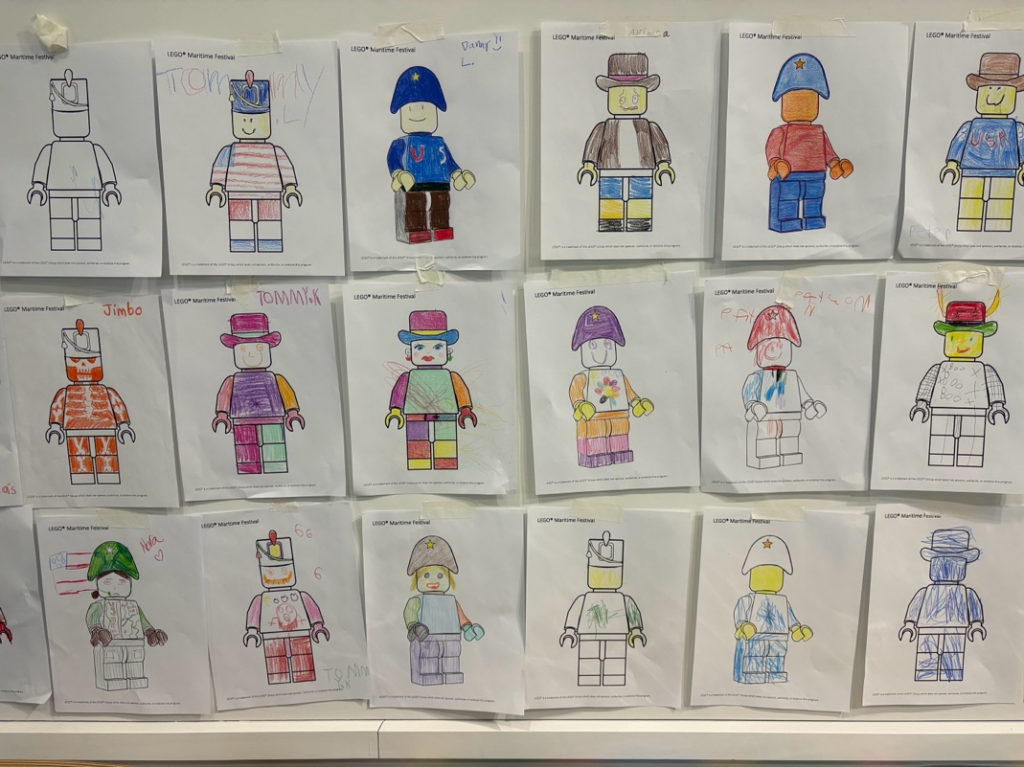
wide range of creative interpretations.
festival included several components, the highlight of which was the Ship Shape Challenge. To enter the competition, visitors were encouraged to imagine and build a ship or seafaring vessel using the museum’s vast Lego collection. Museum staff photographed each entry and posted it on an online forum, where a daily winner was chosen by age group. Lego enthusiasts were also able to craft their own builds at home and upload them into a separate forum. A grand prize winner, selected by the museum’s staff, will be announced in March. In the education center, visitors were additionally welcome to construct models of the USS Constitution, USS Cassin Young or USS Nantucket from provided instruction booklets. At one end of the room, visitors colored in their own Lego mini-figure designs of sailors or marines. The festival even included the adult-only event “Bricks and Brews,” where visitors aged 21+ experienced the museum’s Lego activities after-hours over drinks and hors d’oeuvres. All these activities were tailored to welcome visitors of all ages, aligning closely with the USS Constitution Museum’s outreach mission.
The USS Constitution Museum was incorporated in 1972 in the historic Charlestown Navy Yard’s former pump house, where it “preserves, displays, and interprets artifacts related to the [USS Constitution]
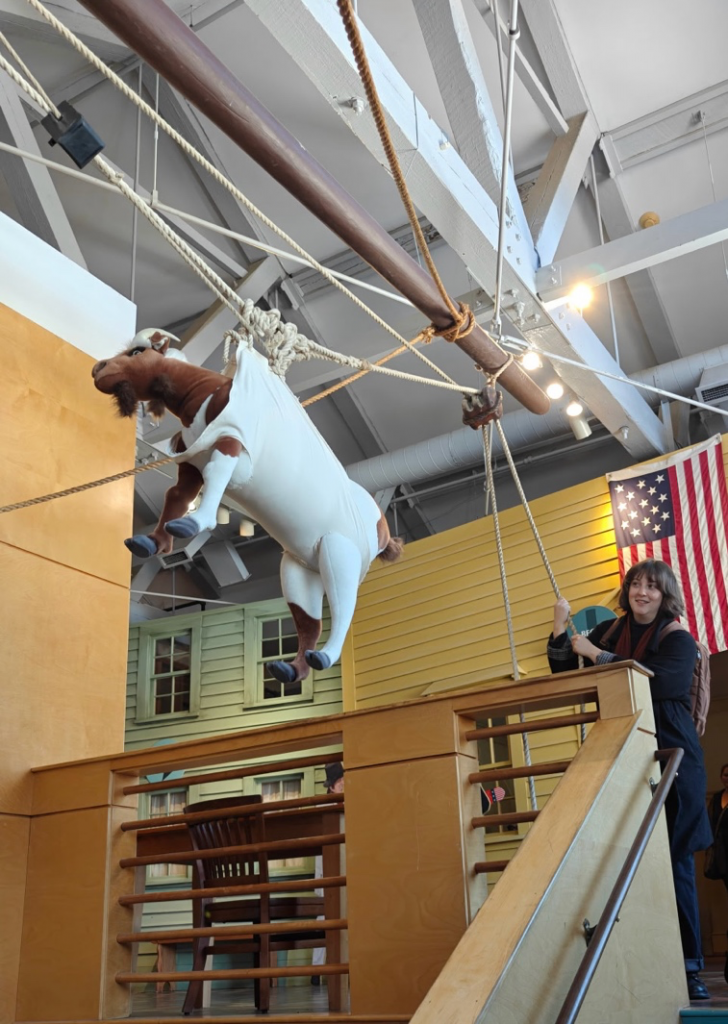
and her crew.” The ship itself is docked nearby and is managed by the United States Navy as a separate historical site, known for its status as the world’s oldest commissioned warship still afloat. While visitors to the Constitution are only able to experience the ship through 30-minute tours hosted by active Navy personnel, the USS Constitution Museum is designed to be a “hands-on, minds-on” environment where visitors explore at their own pace. The “All Hands On Deck” exhibition is especially interactive, inviting visitors to hoist sails, swing in hammocks, and scrub the deck as “crewmembers” during the War of 1812. Throughout a visit, the ship’s history and legacy emerge through dynamic learning and play.
The USS Constitution Museum’s approach to outreach is unique for its emphasis on intergenerational engagement. Susan Reed, a Senior Interpretation & Visitor Services Representative who helps facilitate the Lego Maritime Festival, highlighted the Museum’s Engage Families project. Initiated in 2004, the project sought to research and implement strategies for exhibits and programs that “result in active intergenerational engagement, enjoyment, and The author experiences interactive learning in the “All Hands On Deck” exhibition by hoisting a goat into the air. learning in museums and libraries.” Unlike “kid-friendly” programming that simply targets children, the project focuses on engaging family members of all ages in multigenerational group learning and interaction. While the project formally concluded in 2016, its findings have been “transformative” in shaping the Museum’s exhibits and general approach to outreach, epitomized by innovative programming like the Lego Maritime Festival. The Engage Families project is fully documented on the Museum’s website, including a toolkit for other GLAM institutions to explore and use.
The day I visited the museum, this multigenerational engagement was in full swing. As an adult, it can sometimes feel uncomfortable to try out interactive exhibits that are clearly designed for children, but the education center was welcoming and comfortable.
I settled at a table, grabbed a plastic bowl, and selected a rainbow of Lego bricks. Taking one of the provided blue base plates, I constructed my ship—admittedly not the most seaworthy-looking vessel—and brought it to Susan to photograph and post on the online competition page. By the end of the week, over 270 ships were entered into the contest, including aircraft carriers, sea monsters, battleships, a Korean geobukseon (turtle ship), and a yellow submarine. Their creators range from ages three to 63 and include many family groups. After I finished my build, I explored the rest of the museum’s exhibitions, where I learned about the history of “Old Ironsides” and its maritime heritage.
Ultimately, the Lego Maritime Festival is a highly successful outreach project that fits perfectly into the USS Constitution Museum’s mission. It is well-timed to align with school vacation week, giving families an opportunity to play and learn together in multigenerational groups. Legos are appealing and accessible, and the festival’s events
are fun, creative, and educational while connecting closely to the Museum’s focus on maritime history. Visitors are likely to explore the rest of the museum’s interactive exhibits after they participate in the festival activities. These elements all contribute to the “hands-on, minds-on” approach espoused by the museum’s mission statement, making it an innovative and effective outreach project